Extraction and drying
Water extraction and structural drying
Standing water comes out first. Then the walls, floors and framing have to be dried, and that part is measured, not guessed.
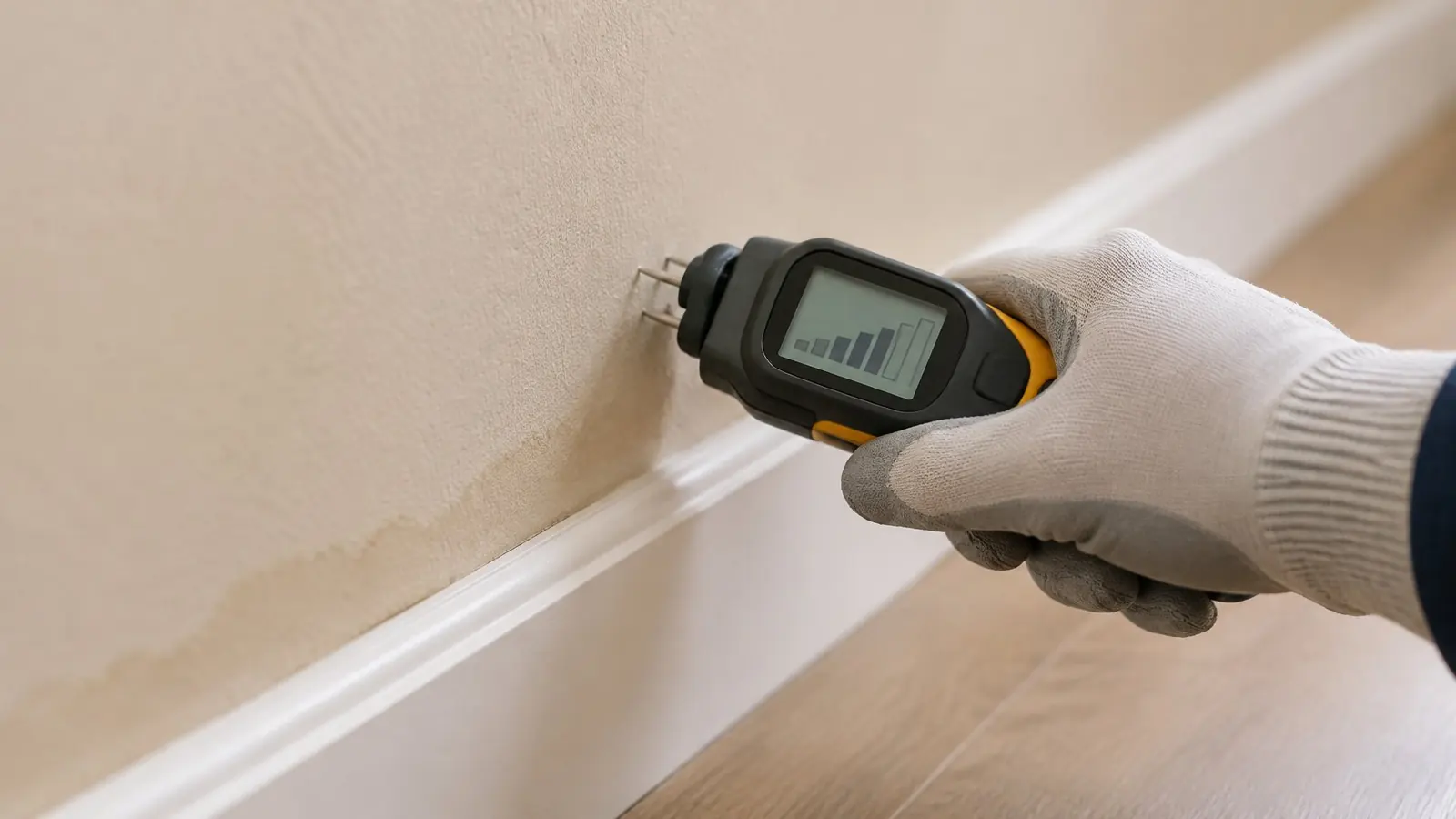
From wet vacuum to dry readings
Extraction uses truck-mounted or portable pumps and wet vacuums to lift water out of carpet, pad and hard floors. The more water removed at this stage, the shorter the drying that follows.
Drying is a balance of airflow, dehumidification and sometimes heat. Air movers pull moisture off surfaces into the air; dehumidifiers take it out of the air and send it down a drain. Walls may be opened at the bottom or have small holes drilled so air can reach the cavity behind them.
The finish line is a set of moisture readings that match unaffected areas of the same house. Ask to see them. A drying log is also handy if you later talk with your insurer about the loss.
Not all water is the same
Clean, gray and black water
Restoration contractors sort water by how contaminated it is, because that decides what can be dried and what has to go.
Clean water
From a supply line, a faucet or a water heater. Usually the easiest to dry in place if it is dealt with quickly.
- Burst supply pipes
- Overflowing sinks or tubs with clean water
- Rainwater through a window, early on
Gray water
Water carrying soaps, food or other contaminants. More of the soft material is usually removed.
- Washing machine and dishwasher discharge
- Toilet overflow with urine but no feces
- Clean water that has sat for a while
Black water
Grossly contaminated water. Porous materials it touched are generally removed and the area is disinfected.
- Sewage backups
- Rising flood water from outside
- Any water that has stood long enough to grow bacteria
While the equipment is running
- Keep the house closed up so the dehumidifiers are not fighting humid outdoor air.
- Leave the equipment where it was placed, even if it is in the way.
- Expect noise and some extra power use for several days.
- Keep children and pets away from cords and open wall cavities.
- Tell the contractor if a smell gets worse rather than better.
Questions
Water extraction and drying: common questions
Why are holes being drilled in my walls?
Small holes near the floor let dry air into the cavity behind the drywall, which can save the wall from being cut out. They are patched once readings show the cavity is dry.
Can I turn the equipment off at night?
Ask first. Drying goes faster when it runs without a break, and switching units off can stretch the job out. If noise is a real problem, the contractor may be able to move or swap a unit.
Related problems
- Water damage restorationLeaks, overflows and storm water: extraction, drying and the rebuild afterwards.
- Burst and frozen pipesA split line in a crawl space, wall or attic, and the water it leaves behind.
- Flooded basement or crawl spaceWater in a basement or crawl space after heavy rain or a plumbing failure.
Water where it should not be?
Get an Atlanta restoration contractor on the line
The sooner wet materials start drying, the less there usually is to tear out. One call puts you through to an independent contractor who can look at the damage, explain the work and give you their own price.
Speak with a restoration contractor
Your call is routed to an independent water, fire and mold restoration contractor that takes jobs in metro Atlanta. Describe the damage and ask what they would do first.
Call (678) 649-1321Calls may be recorded. How referrals work: disclosure. How call data is handled: privacy.