Water damage restoration · Atlanta
Water damage restoration in Atlanta homes
A supply line lets go, a toilet overflows upstairs or rain finds a way in. Call and you are connected with an independent restoration contractor that works across the city.
Three jobs, in order
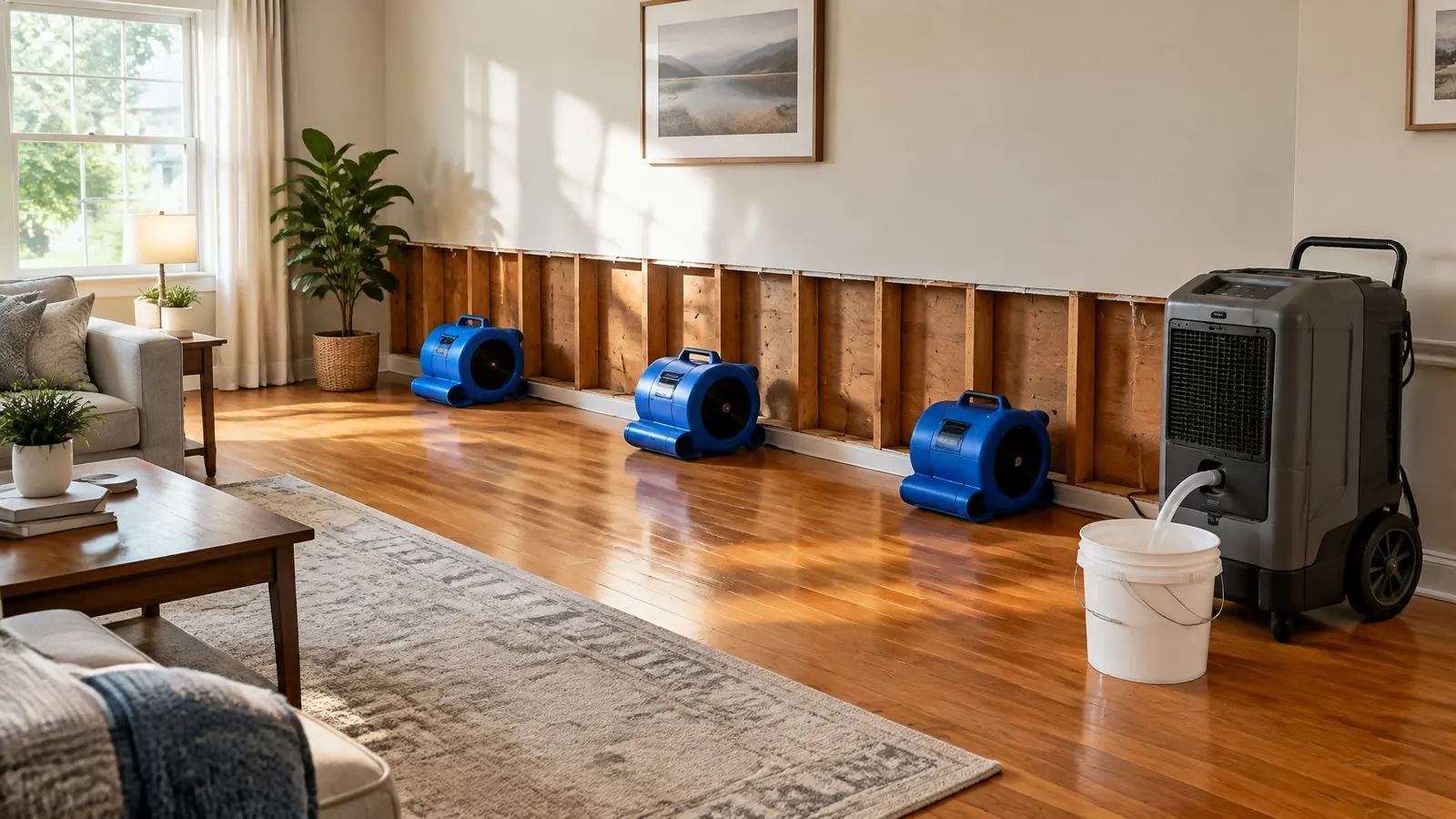
Restoration after a leak is really three jobs done in sequence. The water that is standing gets pulled out. The structure that soaked it up gets dried. Then whatever could not be saved is rebuilt.
Most of the time and skill goes into the middle step. Drywall wicks water upward, hardwood cups as the boards swell, and the space under a floor can stay damp for days after the surface feels dry. A contractor measures moisture in the materials and keeps the drying equipment running until the numbers come back down.
Rebuilding is often a separate stage, sometimes handled by the same company and sometimes not. It helps to ask on the first call who will put the walls and floors back.
Worth asking before work starts
- Where they think the water travelled, and how they will check inside walls and under flooring.
- Which materials they expect to remove and which they expect to dry in place.
- How they record moisture readings and how often they come back to check.
- Whether a permit may be needed for the repair work, and who applies for it.
- How they bill: by the day, by equipment, by square foot or a written scope.
- Who does the rebuild once everything is dry.
Questions
Water damage restoration: common questions
Is the floor dry once it stops feeling wet?
Not necessarily. Subfloor, the underside of hardwood and the bottom of drywall can hold moisture well after the surface feels dry to the hand. A moisture meter is the way to tell, which is why contractors take readings each visit.
Will my hardwood floor have to come out?
It depends on how long the water sat, the type of flooring and how much it has cupped. Some floors flatten as they dry; others are too swollen or stained. A contractor can usually tell you after taking readings and looking underneath.
Should I start pulling up carpet myself?
Photograph everything first. Lifting wet carpet is heavy and the pad underneath may need to go anyway, so it is often easier to let the contractor decide what comes out. If the water is from a sewer or toilet, don't handle it without protection.
Related problems
- Water extraction and dryingPumping out standing water, then drying the structure with measured readings.
- Burst and frozen pipesA split line in a crawl space, wall or attic, and the water it leaves behind.
- Flooded basement or crawl spaceWater in a basement or crawl space after heavy rain or a plumbing failure.
Water where it should not be?
Get an Atlanta restoration contractor on the line
The sooner wet materials start drying, the less there usually is to tear out. One call puts you through to an independent contractor who can look at the damage, explain the work and give you their own price.
Speak with a restoration contractor
Your call is routed to an independent water, fire and mold restoration contractor that takes jobs in metro Atlanta. Describe the damage and ask what they would do first.
Call (678) 649-1321Calls may be recorded. How referrals work: disclosure. How call data is handled: privacy.