Sewage backups
Sewage backup cleanup
Wastewater in the house is a health problem as well as a mess. Porous materials it touches usually go, and the area is cleaned, disinfected and dried.
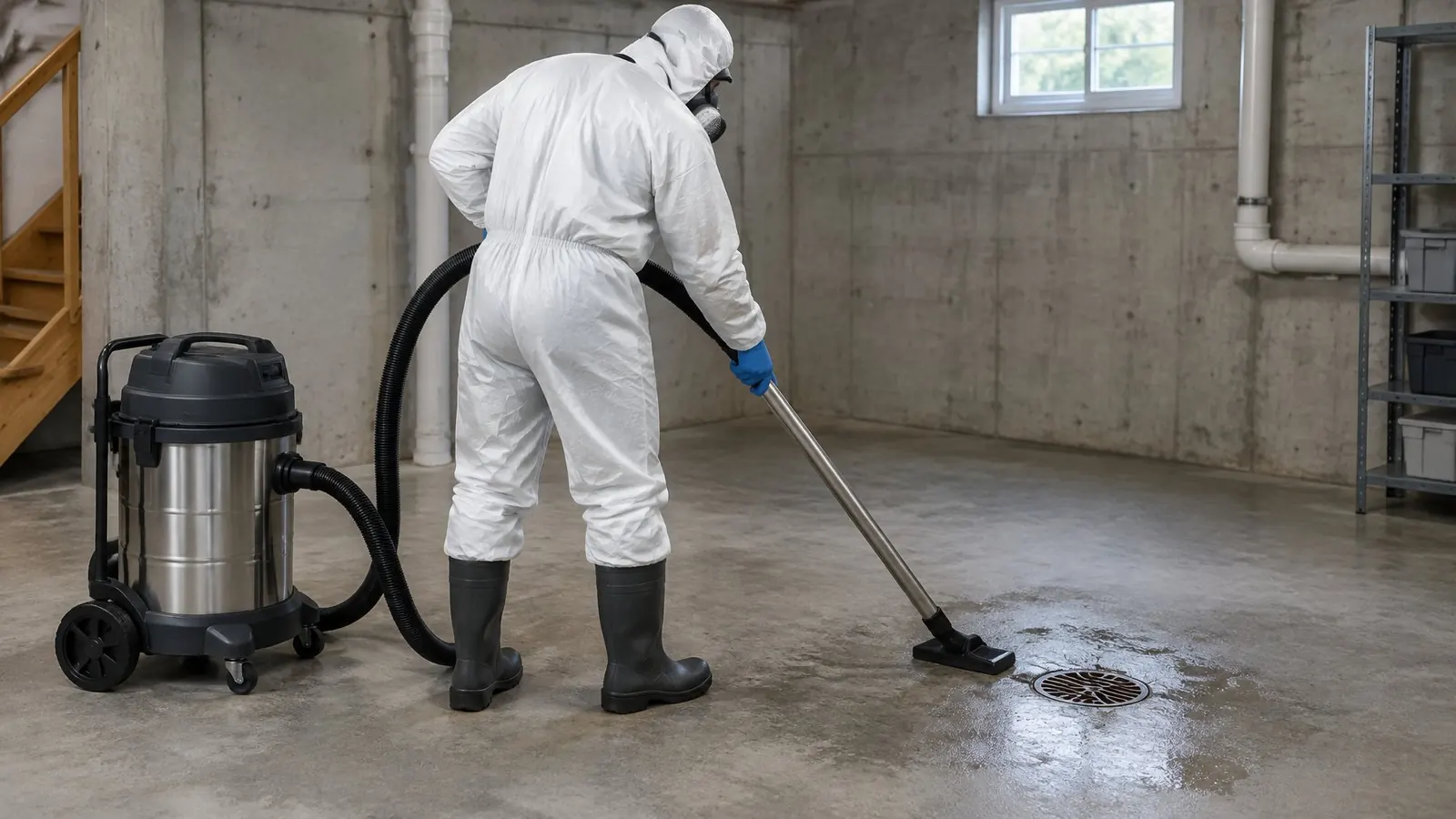
How sewage cleanup differs
Sewage carries bacteria and other contaminants, so the rules change. Carpet, pad, drywall and insulation that soaked it up are generally removed rather than dried. Hard surfaces are cleaned and disinfected. Workers wear protective suits, gloves, boots and respirators.
Before the cleanup, someone has to find out why it backed up. A blockage in the pipe from the house to the street is usually a plumber's job. A problem in the public sewer is the utility's. Report it either way.
Grease is a common culprit. Atlanta's water department notes that cooking grease poured down a drain hardens as it cools and builds up inside pipes, and that sewer backups can damage homes and create health hazards.
Until the contractor arrives
- Don't flush, shower or run the dishwasher or washer.
- Keep everyone out of the affected rooms, especially children and pets.
- Don't use a household vacuum or fans on contaminated water.
- Wash hands well if you touch anything that got wet.
- Photograph the damage and the drain it came from.
Questions
Sewage backup cleanup: common questions
Can I clean up a small sewage spill myself?
Small spills on hard floors can sometimes be handled with gloves, boots and disinfectant. Once sewage has soaked into carpet, drywall or a crawl space, removal is safer left to a contractor with protective gear.
Does homeowners insurance cover a sewer backup?
Policies differ. Many treat water that backs up through drains separately from a burst pipe, and some cover it only with an added endorsement. Your declarations page and your agent can tell you; the Georgia insurance guide on this site explains the general terms.
Related problems
- Water damage restorationLeaks, overflows and storm water: extraction, drying and the rebuild afterwards.
- Water extraction and dryingPumping out standing water, then drying the structure with measured readings.
- Burst and frozen pipesA split line in a crawl space, wall or attic, and the water it leaves behind.
Water where it should not be?
Get an Atlanta restoration contractor on the line
The sooner wet materials start drying, the less there usually is to tear out. One call puts you through to an independent contractor who can look at the damage, explain the work and give you their own price.
Speak with a restoration contractor
Your call is routed to an independent water, fire and mold restoration contractor that takes jobs in metro Atlanta. Describe the damage and ask what they would do first.
Call (678) 649-1321Calls may be recorded. How referrals work: disclosure. How call data is handled: privacy.