Basements and crawl spaces
Flooded basement and crawl space cleanup
Below-grade spaces collect water from every direction: through walls, up through drains and down from leaks above. The cleanup depends on which one it was.
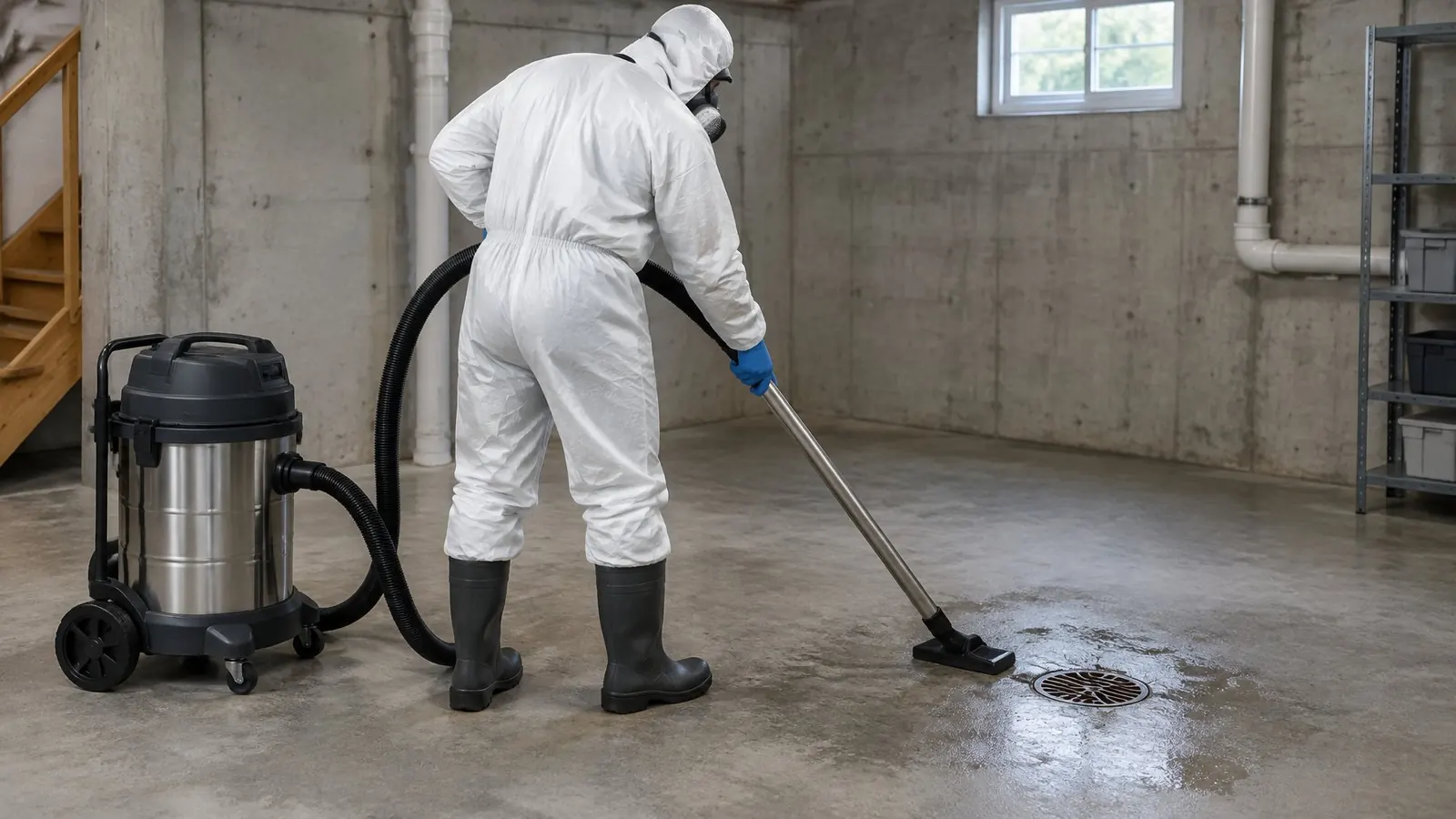
Where the water came from matters
Rainwater that seeps through a foundation wall, water that rises out of a floor drain and water from a failed water heater are three different problems. The first is a drainage issue, the second may be sewage, and the third is usually clean water. A contractor treats each differently.
Crawl spaces add their own trouble. They are tight, dark and often lined with insulation and a vapor barrier that hold water. Wet insulation generally has to come down, and the soil and framing need to dry before a new barrier goes in.
Finished basements hide water behind drywall, baseboards and carpet pad. Expect some of the lower wall to be opened so the space behind it can dry.
Tell the contractor
- Whether the water came through a wall, up a drain or from a pipe or appliance.
- How deep it got and whether it reached the furnace, water heater or panel.
- Whether the basement is finished: drywall, carpet, built-ins.
- Whether there is a sump pump and whether it was running.
- If it has happened before, and roughly when.
Questions
Flooded basement or crawl space: common questions
Water came up through the floor drain. Is that sewage?
It might be. If the drain connects to the sanitary sewer, water that backs up through it should be treated as contaminated until someone says otherwise. Keep people and pets away and see the sewage backup page.
Do I need a dehumidifier after the cleanup?
Many below-grade spaces benefit from one, but ask the contractor once drying is done. They can tell you whether readings suggest a lasting moisture problem.
Related problems
- Water damage restorationLeaks, overflows and storm water: extraction, drying and the rebuild afterwards.
- Water extraction and dryingPumping out standing water, then drying the structure with measured readings.
- Burst and frozen pipesA split line in a crawl space, wall or attic, and the water it leaves behind.
Water where it should not be?
Get an Atlanta restoration contractor on the line
The sooner wet materials start drying, the less there usually is to tear out. One call puts you through to an independent contractor who can look at the damage, explain the work and give you their own price.
Speak with a restoration contractor
Your call is routed to an independent water, fire and mold restoration contractor that takes jobs in metro Atlanta. Describe the damage and ask what they would do first.
Call (678) 649-1321Calls may be recorded. How referrals work: disclosure. How call data is handled: privacy.